For outdoor pot cultivation, high-quality, airy soil is the ideal foundation. Since the plant only has a limited substrate volume available, it is more reliant on a reliable supply in the pot.
The right substrate for outdoor pots
A mixture of soil and 10-20% perlite is particularly recommended. Perlite improves drainage, prevents waterlogging, and ensures stable aeration of the roots – even in changing weather conditions.
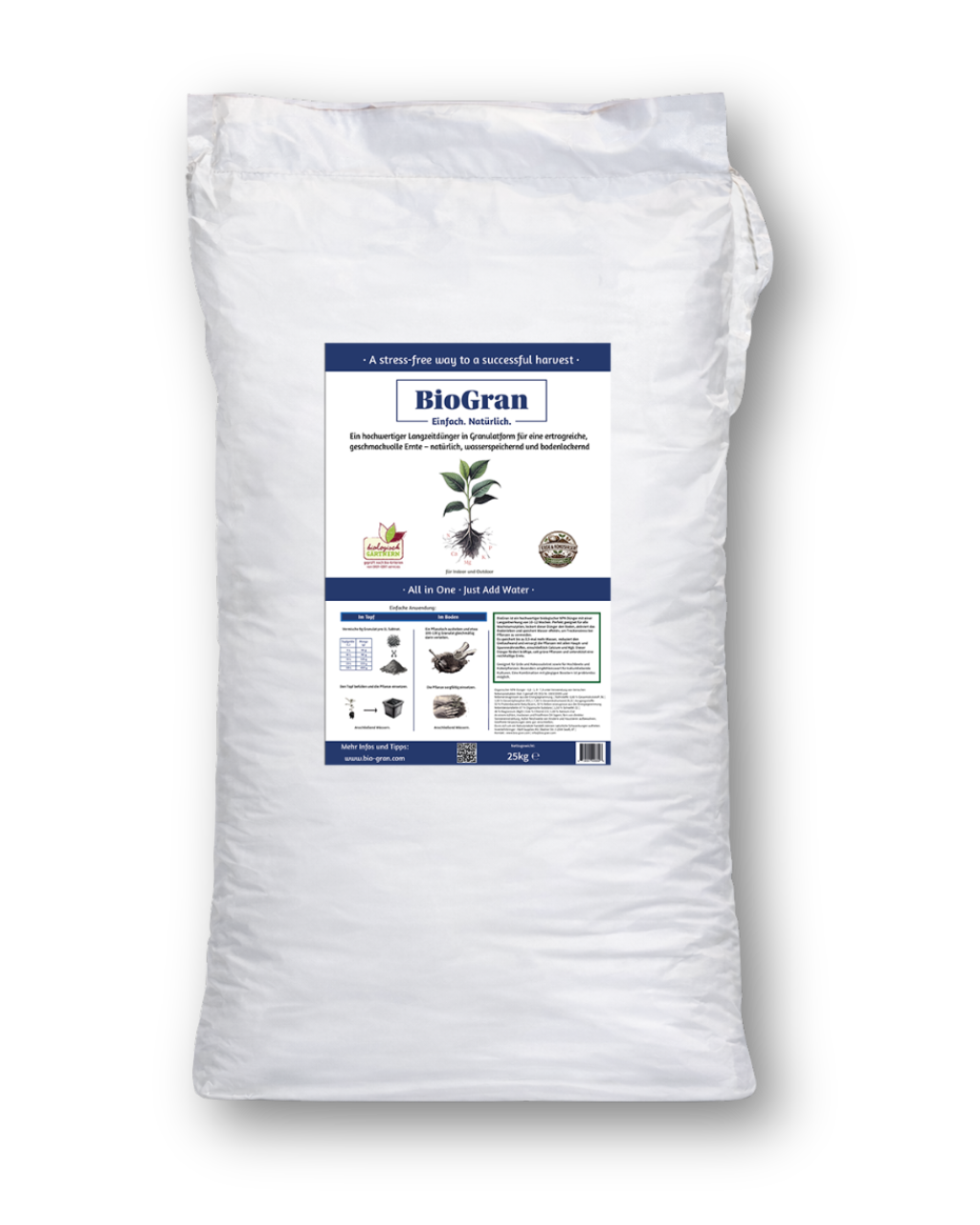
BioGran can be easily used in outdoor pots. Due to its organic long-term effect, nutrients are continuously released and adapted to the natural needs of the plant.
Important note for outdoor pot cultivation
Outdoors, additional factors such as rain, temperature fluctuations, and direct sunlight directly affect the substrate.
This can lead to faster nutrient displacement, dehydration, or uneven supply. Especially after heavy rainfall or heat periods, the substrate should therefore be checked regularly.
Applying BioGran in 3 simple steps
1. Measure and mix in the granules
Measure 9 g of BioGran per liter of substrate. Then add the granules to the substrate and mix everything thoroughly until it is evenly distributed.
This ensures that nutrients are continuously released and are evenly available to the plant.
Practical Tip
Mix the substrate in a larger container before filling the pots. This ensures that the granules are evenly distributed and no local over- or under-supply occurs.
2. Plant the plant
Fill the pot with the prepared mixture, leaving about 2–3 cm of space to the rim. Insert the plant and gently press down the substrate without compacting it.
3. Water and care for
Thoroughly water the plant after planting. Ensure that excess water can drain well and no waterlogging occurs.
Outdoors, the substrate can dry out faster due to sun and wind. At the same time, heavy rain can thoroughly soak the substrate or wash out nutrients.
Optimal Start Phase
Also outdoors: BioGran is activated by microorganisms and has a delayed effect.
To ensure the plant establishes well, it is recommended to support it slightly during the first 7–10 days – especially in cool weather or with low microbial activity in the substrate. Once the system is established, BioGran takes over the long-term nutrient supply.
Optional: Microorganisms
The addition of microorganisms can also be beneficial in outdoor pot cultivation, especially with new or rather sterile substrates. They accelerate the activation of the fertilizer and help to stabilize soil life more quickly.
Climate and Environmental Factors
Outdoors, temperature, sunlight, wind, and precipitation are crucial influencing factors. They directly affect the substrate and the plant.
- Strong sun can dry out the substrate faster.
- Rain can displace or partially wash out nutrients.
- Cool temperatures slow down nutrient release.
- A sheltered location with good air circulation ensures more stable conditions.
Does it need re-fertilizing?
Generally, no. BioGran provides the plant with long-term and reliable nutrients as long as moisture, temperature, and soil life remain in balance.
The Basic Principle of Outdoor Pot Cultivation
In outdoor pot cultivation, it's not just the fertilizer itself that matters, but above all the interplay of moisture, temperature, and active soil life.
This is precisely where BioGran shows its strength: The granules don't supply your plant in the short term and uncontrollably, but build a stable, organic nutrient system that works long-term.
If the substrate, climate, and irrigation are in harmony, a reliable foundation is created for healthy plants, even growth, and sustainable supply for many weeks.
Troubleshooting – Common Problems and Solutions
Slow growth after planting
Immediately after planting, growth can initially be slowed. Common causes include cool temperatures or low microbial activity in the substrate.
Solution: Be patient, keep the substrate evenly moist, and provide slight support during the initial phase if necessary.
Substrate dries out quickly
This problem occurs particularly with strong sunlight, warm temperatures, or windy locations. The substrate then quickly loses moisture, which can impair nutrient release and root growth.
Solution: Water regularly, use larger pots if necessary, and optionally use a light mulch layer to retain moisture in the substrate longer.
Waterlogging after rain
Too wet substrate can stress the roots and worsen oxygen supply in the root area. This is a common stress factor, especially after prolonged rain periods.
Solution: Ensure good drainage, let excess water drain off, and only use pots with sufficient drainage holes.
Uneven growth
Uneven growth can occur if the granules were not evenly distributed or if the plant is exposed to changing conditions such as sun, wind, or moisture.
Solution: Mix the substrate thoroughly before planting and keep the location as constant as possible.
Weak growth despite fertilizer
If the plant grows weakly despite fertilization, the cause is often not the fertilizer itself, but external conditions such as low temperatures or inactive soil life.
Solution: Ensure more stable conditions and use microorganisms if necessary to promote activity in the substrate.